Rücknahme EAG: Erweitert und verändert | Take back WEEE: Expanded and modified
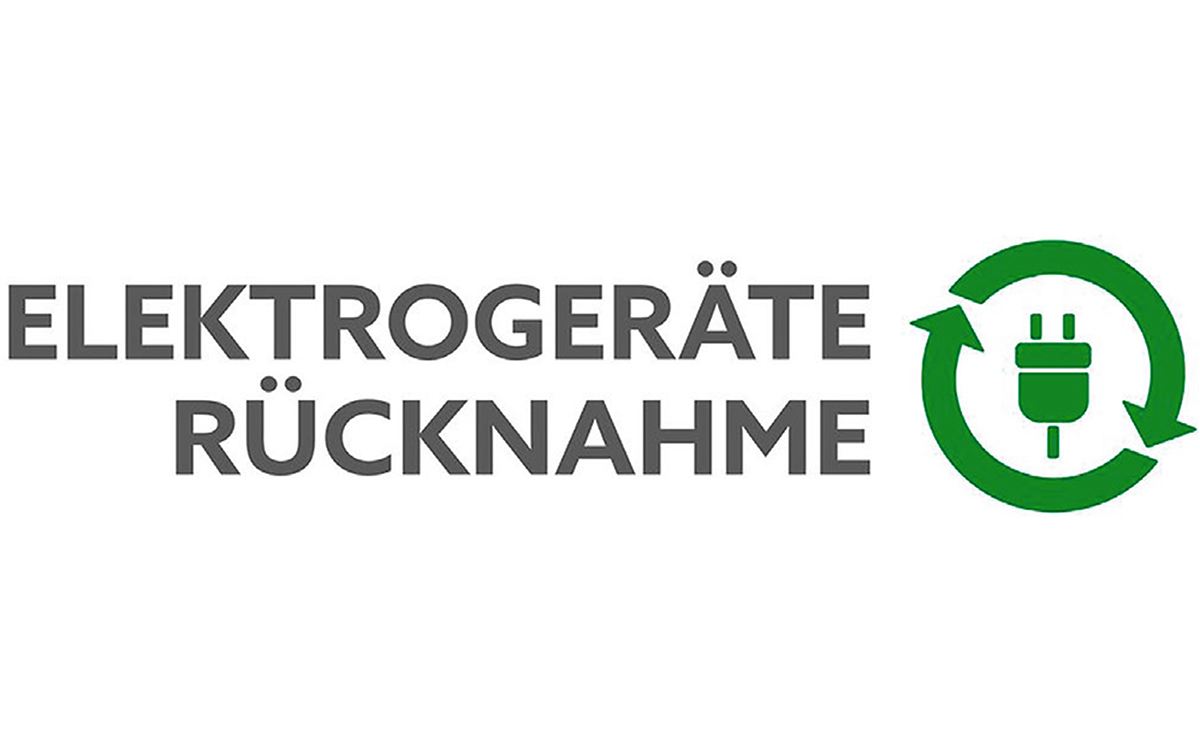
Pflicht ab Juli 2026: Kennzeichnung der Rücknahmestellen. | Mandatory from July 2026: labelling of collection points.
©Foto: PlanE | Stiftung EARSeit 2004 regelt die Europäische Union (EU) die Entsorgung von Elektro- und Elektronik-Altgeräten (EAG) durch die WEEE-Richtlinie: Ursprünglich 19 Artikel und 4 Anhänge (2002/96/EG), später erweitert auf 27 Artikel und 12 Anhänge in der Neufassung 2012/19/EU und zuletzt angepasst durch die Richtlinie 2024/884/EU. Für das Inverkehrbringen neuer Elektro- und Elektronikgeräte (EEG) hingegen gibt es bis heute keine vergleichbare europäische Regulierung.
Das
- Inverkehrbringen von Elektro- und Elektronikgeräte (EEG)
- Entsorgen von Elektro-Altgeräten (EAG)
ist in Deutschland seit 2005 reguliert (Gesetz über das Inverkehrbringen, die Rücknahme und die umweltverträgliche Entsorgung von EEG (ElektroG): 25 Paragrafen und 4 Anhänge, geändert 2009, 2020 und 2025: nun 52 Paragrafen und 8 Anlagen).
Registrierungspflichten
Wer Elektro- und Elektronikgeräte (EEG) in Deutschland in Verkehr bringen will, muss zuvor bei der Stiftung Elektro-Altgeräte Register (ear) registriert sein – aktuell sind dort rund 135.000 Hersteller gelistet (§ 31 Abs. 2 ElektroG). Jeder Hersteller ist verpflichtet, seine Registrierungsnummer sowohl beim Anbieten als auch auf Rechnungen anzugeben. Das öffentliche Verzeichnis enthält den Herstellernamen, die Gerätekategorie (§ 2 Abs. 1, Anlage 1 ElektroG) sowie die Art des Geräts (§ 3 Nr. 2, Anlage 2 Nr. 5 ElektroG) – jedoch nicht das konkrete Modell. Ist ein Hersteller nicht registriert, dürfen
- Vertreiber (Händler) die EEG dieses Herstellers nicht zum Verkauf anbieten
- Betreiber von elektronischen Marktplätzen das Anbieten oder Bereitstellen von EEG dieses Herstellers nicht ermöglichen
- Fulfilment-Dienstleister die Lagerhaltung, Verpackung, Adressierung oder den Versand der EEG dieses Herstellers nicht vornehmen.
EAG aus privaten Haushalten müssen zurückgenommen werden von den
- Vertreibern in Abhängigkeit von der Größe ihrer Verkaufsfläche (400 m² bzw. 800 m²); die dort gesammelten EAG müssen von den Herstellern oder den öffentlich-rechtlichen Entsorgungsträgern zurückgenommen werden.
- öffentlich-rechtlichen Entsorgern (örE). Die dort gesammelten EAG müssen von den Herstellern abgeholt und entsorgt werden; das koordiniert die Stiftung ear.
Elektro-Altgeräte (EAG) aus Industrie und Gewerbe müssen vom jeweiligen Hersteller zurückgenommen werden – und das in einem klar definierten Rücknahmekonzept.
Das gesetzliche Sammelziel liegt bei 65 Prozent, tatsächlich wurden 2023 jedoch nur rund 30 Prozent erreicht. Für die fachgerechte Behandlung stehen derzeit etwa 400 zertifizierte Erstbehandlungsanlagen in Deutschland bereit (§ 31 Abs. 3 ElektroG).
Neue Pflichten: informieren, kennzeichnen und kostenfrei zurücknehmen
Das 2. ElektroG-ÄndG vom 25.11.2025 brachte mehrere Neuerungen mit sich, die in zwei Etappen umgesetzt werden.
Seit 01.01.2026:
- Hersteller von EEG und zur Rücknahme von EAG verpflichtete Vertreiber haben den privaten Endnutzer ab dem Zeitpunkt des Anbietens von EEG über die Risiken beim Umgang mit lithiumhaltigen Batterien zu informieren (§ 18 (3) S. 1 Nr. 2, (4) S. 1 Nr. 2 ElektroG).
- Änderungen bei den Mitteilungspflichten der Hersteller an die Stiftung ear (§ 27 (1) S. 1 Nrn. 2 und 4, neuer Satz 3, neuer (2a)).
Ab 01.07.2026:
- Zur Rücknahme von EAG verpflichtete Vertreiber müssen ihre Sammel- und Rücknahmestellen einheitlich kennzeichnen (EAG-Logo) (alt §§ 12 (1), 31 (1) S. 5; neuer § 18a i.V.m. neuer Anlage 3a ElektroG).
- Vertreiber von elektronischen Zigaretten und Tabakerhitzern müssen die Altgeräte am Ort der Abgabe der Neugeräte oder in unmittelbarer Nähe hierzu, unabhängig von der Größe der Verkaufsfläche, unentgeltlich zurückzunehmen und entsorgen (§ 17 neuer (1a) ElektroG).
Dr. Norbert Müller,
ö.b.u.v. Sachverständiger für Gefahrguttransport und -lagerung, Duisburg
The disposal of waste electrical and electronic equipment (WEEE) has been regulated in the EU since 2004 (WEEE Directive (2002/96/EC): 19 articles and 4 annexes; revised by Directive 2012/19/EU: now 27 articles and 12 annexes), amended by Directive 2024/884/EU). The placing on the market of new electrical and electronic equipment (EEG) in the EU is not regulated.
The placing on the market of EEG and the disposal of WEEE has been regulated in Germany since 2005 (Act on the Placing on the Market, Take-Back and Environmentally Sound Disposal of EEE (ElektroG): 25 sections and 4 annexes, amended in 2009, 2020 and 2025: now 52 sections and 8 annexes).
A manufacturer of WEEE may only place its WEEE on the market in Germany if it is registered with the WEEE Register Foundation (ear); there are currently 135,000 such manufacturers (Section 31 (2) ElektroG). Every manufacturer is obliged to state their registration number when offering products for sale and on invoices. The register contains the name of the manufacturer, the category (Section 2 (1), Annex 1 ElektroG) and the type (Section 3 No. 2, Annex 2 No. 5 ElektroG) of the EEE, but not the specific device. If a manufacturer is not registered,
- distributors (retailers) must not offer this manufacturer‘s WEEE for sale
- operators of electronic marketplaces must not enable the offering or provision of this manufacturer‘s WEEE
- fulfilment service providers must not carry out the storage, packaging, addressing or shipping of this manufacturer‘s WEEE.
WEEE from private households must be taken back by
- distributors depending on the size of their sales area (400 m² or 800 m²); the WEEE collected there must be taken back by the manufacturers or the public waste disposal authorities.
- public waste disposal companies (PWC). The WEEE collected there must be collected and disposed of by the manufacturers; this is coordinated by the ear foundation.
WEEE from non-private households (industry, commerce) must be taken back by the manufacturer of the WEEE. This must be set out in a take-back concept.
The statutory collection target is 65 per cent, but in 2023 only 30 per cent of WEEE was actually collected. Currently, around 400 initial treatment facilities for WEEE are certified in Germany (Section 31 (3) ElektroG).
The 2nd ElektroG-ÄndG of 25 November 2025 introduced the following changes:
Since 1 January 2026:
- Manufacturers of EEG and distributors obliged to take back EAG must inform private end users about the risks associated with handling lithium-containing batteries from the time the EEG is offered (§ 18 (3) sentence 1 no. 2, (4) sentence 1 no. 2 ElektroG).
- Changes to the notification obligations of manufacturers to the ear foundation (Section 27 (1) sentence 1 nos. 2 and 4, new sentence 3, new (2a)). From 1 July 2026:
- Distributors obliged to take back WEEE must label their collection and take-back points uniformly (WEEE logo) (old Sections 12 (1), 31 (1) sentence 5; new Section 18a in conjunction with new Annex 3a ElektroG).
- Distributors of electronic cigarettes and tobacco heaters must take back and dispose of old devices free of charge at the point of sale of new devices or in the immediate vicinity thereof, regardless of the size of the sales area (Section 17 new (1a) ElektroG).
Dr. Norbert Müller,
Publicly certified expert for the transport and storage of dangerous goods, Duisburg
© Copyright 2026 Gefahrgut-Online

Diskutieren Sie mit