Reclassification: Turn 4 into 36
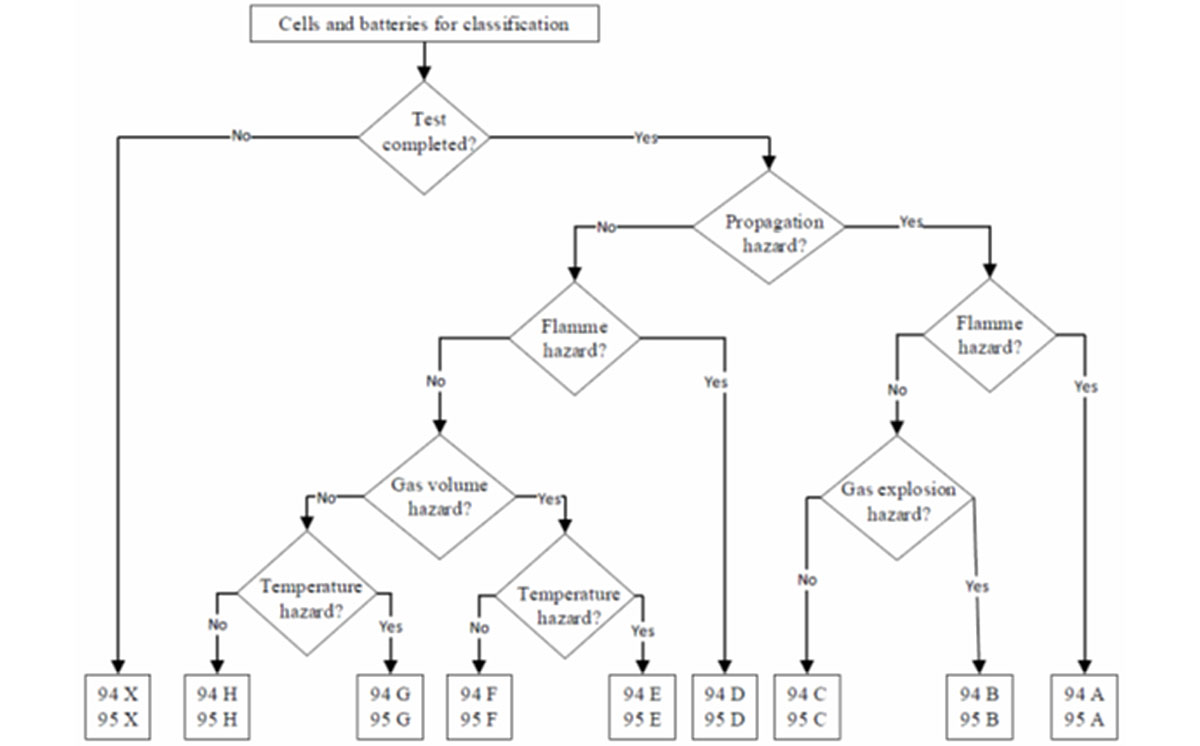
Lithium cells/batteries: Flow chart for determining the classification codes 94A to 94H after passing the tests T.1 to (new) T.13 according to the UN Manual of Tests and Criteria.
©Foto: 1) https://unece.org/DAM/trans/doc/2016/dgac10c3/ST-SG-AC10-C3-100e.pdf, Rn. 95.At the 50th session of the UN SCE TDG at the end of 2016, doubts were expressed as to whether the eight tests („T.1“ to „T.8“) of the prototypes of lithium cells/batteries contained in the UN Manual of Tests and Criteria correctly and fully ref lect the risks posed by these cells/batteries during
transportation.
It was decided what is always decided in such cases: The establishment of an informal working group to develop a proposal for a „risk-based“ classification.1) This working group began its work in spring 2017.
For the 64th session of the UN SCE TDG 24.06.- 03.07.2024 - after seven years of preparatory work - a document that is ready for discussion but not yet ready for a decision has now been presented for the first time.2) The content is presented below in order to gently prepare battery logistics companies for what they will be facing - possibly from 2027.
First of all: Tests T.1 to T.8 remain unchanged. However, the following five tests (T.9 to T.13) are to be added, which make the new categorization possible in the first place:
- Test T.9: Cell Propagation Test
- Test T.10: Cell Gas Volume Determination
- Test T.11: Battery Propagation Test
- Test T.12: Battery Gas Volume Determination
- Test T.13: Cell Gas Flammability Determination.
Five new tests mean more effort - and of course additional costs.
In future, the following four criteria will be decisive for classification:
a) Thermal runaway propagation
b) Fire
c) Risk of gas explosion
d) Risk of high temperature.
The combination of these four criteria results in eight classification codes (94A to 94H), to which the four cases
- Lithium metal cells/batteries
-- alone
-- in or with equipment
- Lithium-ion cells/batteries
-- alone
-- in or with equipment
so that there are a total of 8 x 4 = 32 new UN numbers (4000 to 4031). The previous UN numbers 3090, 3091, 3480 and 3481 will be assigned the classification code 94X and the status „no test information available“; this is intended to cover cells/batteries in accordance with the current special provisions 310 (prototypes) and 376 (damaged/defective).
The previous UN numbers 3551 and 3552 will be given the classification code 95X and the status „no test information available“.
This is intended to cover cells/batteries in accordance with the current special provisions 310 (prototypes) and 376 (damaged/defective).
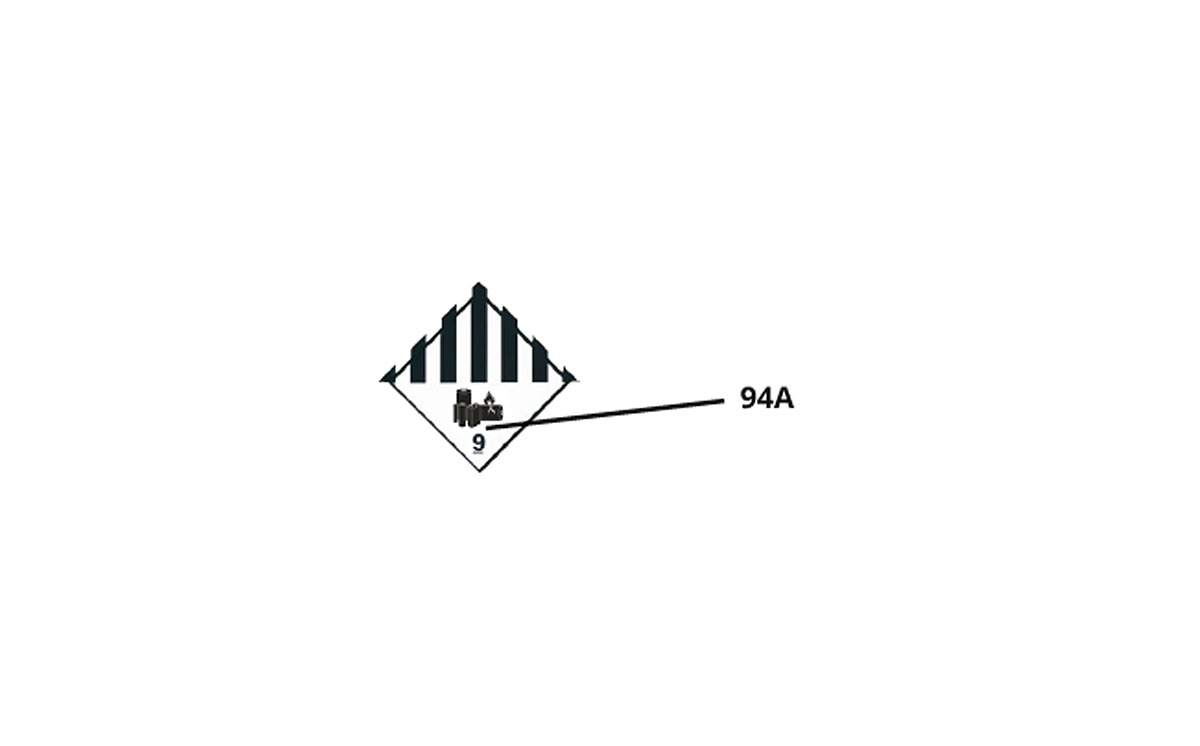
The content of the previous thirteen special regulations 188, 230, 310, 328, 363, 376, 377, 384, 387, 388, 389, 390 and 400 remains essentially unchanged. However, packaging instructions are not yet specified in the document. It is also proposed to include the respective classification code in the hazard label 9A below the battery ensemble; example:
In future, the transport document should state the maximum permissible state of charge.
Conclusion
It‘s getting serious: the reorganization of lithium and sodium-ion cells and batteries is approaching its finale. One thing is already foreseeable: It will certainly not be any easier than it is today. The summer meeting of the UN SCE TDG is eagerly awaited - fokus Gefahr/gut will keep you up to date.
Prof. Dr. Norbert Müller, ö.b.u.v. expert for the transportation and storage of dangerous goods, Duisburg
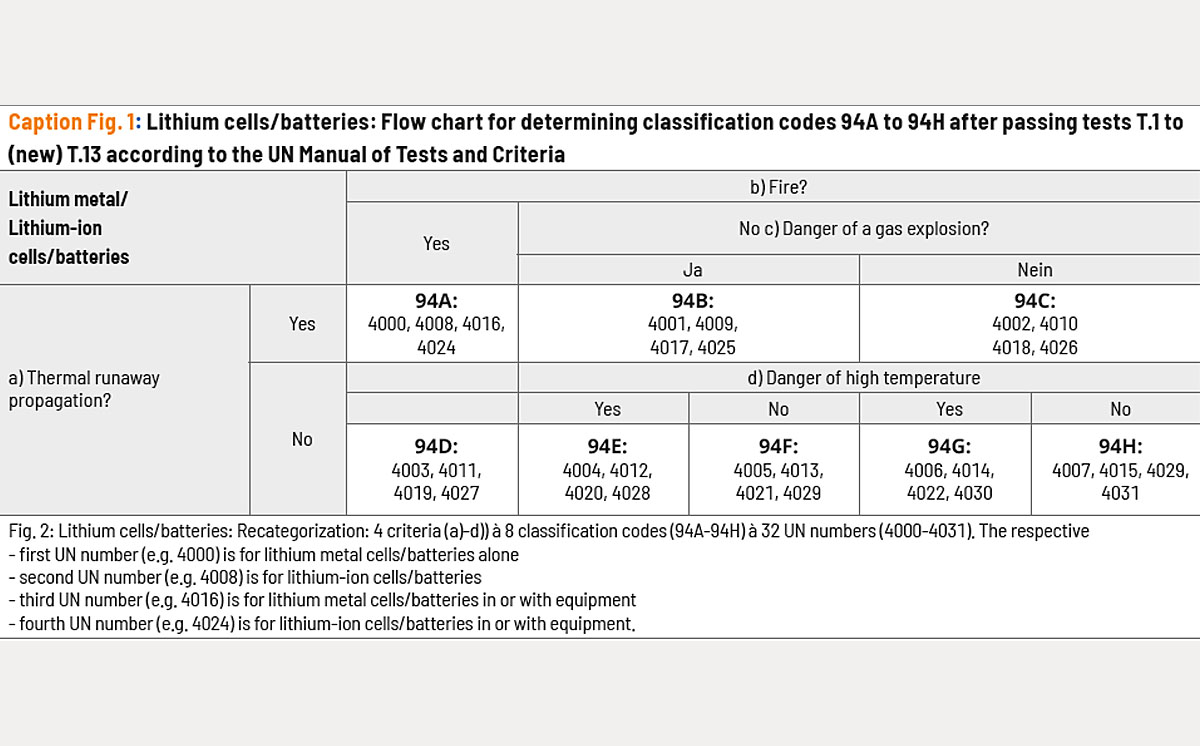
The same is planned for sodium-ion batteries, with the numbers 95A to 95H.
©Foto: Norbert Müller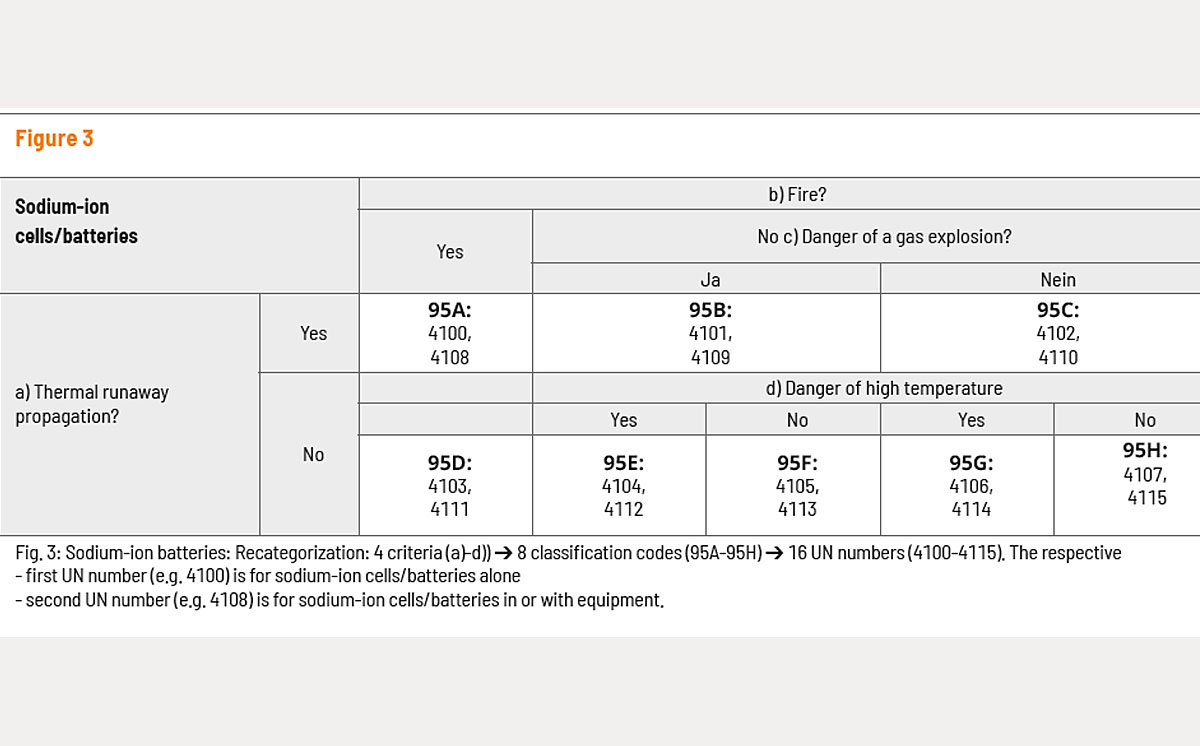
© Copyright 2026 Gefahrgut-Online

Diskutieren Sie mit