Lithium batteries > 100 Wh: Measures and obligations
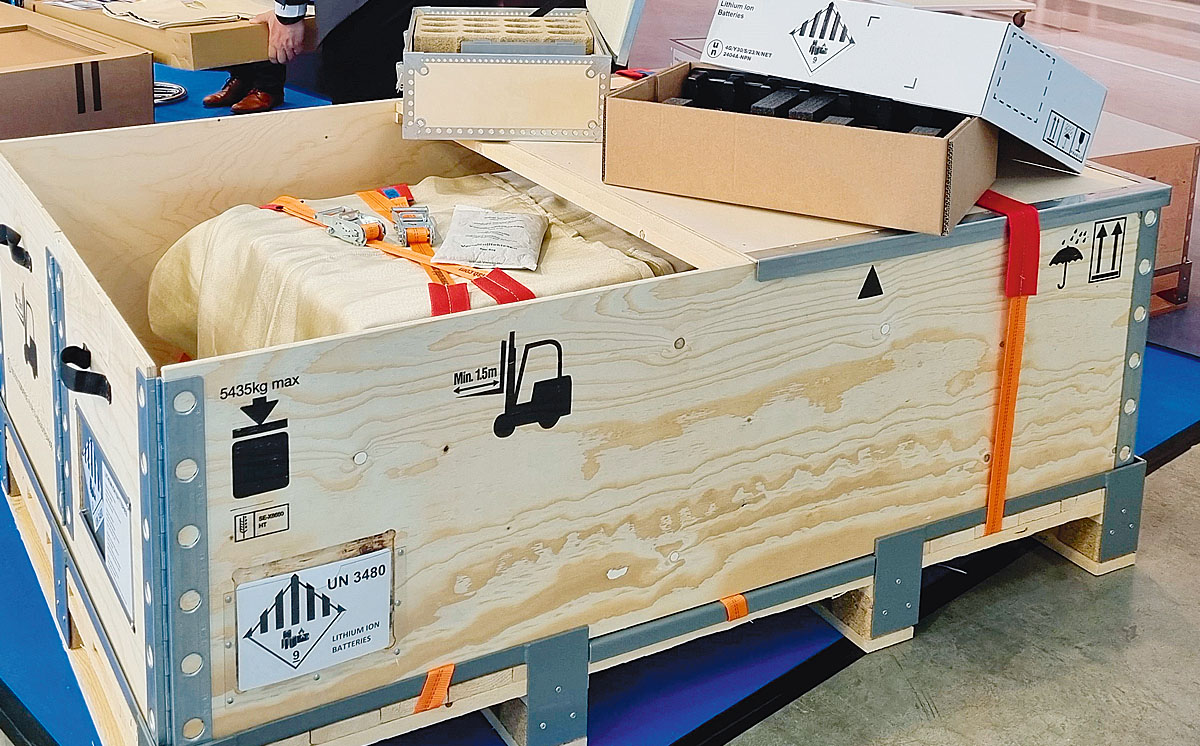
Packaging selection for lithium batteries that fall under dangerous goods legislation.
©Foto: Daniela Schulte-Brader | TECVIA GmbHThe transportation of hazardous goods is a complex process that must be carefully planned and executed, from the correct classification to the unloading and receipt of the goods. These processes also apply to the transportation of lithium batteries.
If the power limits are below 100 Wh (for batteries) or below 1 gram of lithium (for cells), the simplified shipping conditions apply, as described on pages 78 and 79 of this booklet. Anything above this is considered dangerous goods and must be shipped in accordance with the regulations without any further simplifications.
All parties involved in the transport must comply with the various obligations in accordance with the international dangerous goods regulations (for example, the regulations for road transport ADR) and the national German dangerous goods regulations GGVSEB.
Our nine-step process description also takes into account the interfaces between the companies involved. In our article, we explain the individual steps in detail and provide you with references to relevant sources. To give you a concrete insight: Let's assume we are dealing with lithium-ion batteries that weigh 3.2 kilograms each and have a nominal energy of 432 watt hours. Six such batteries are to be transported from an e-bike manufacturer to a bicycle dealer.
Daniela Schulte-Brader
© Copyright 2026 Gefahrgut-Online

Diskutieren Sie mit