Air transport: Secure the departure
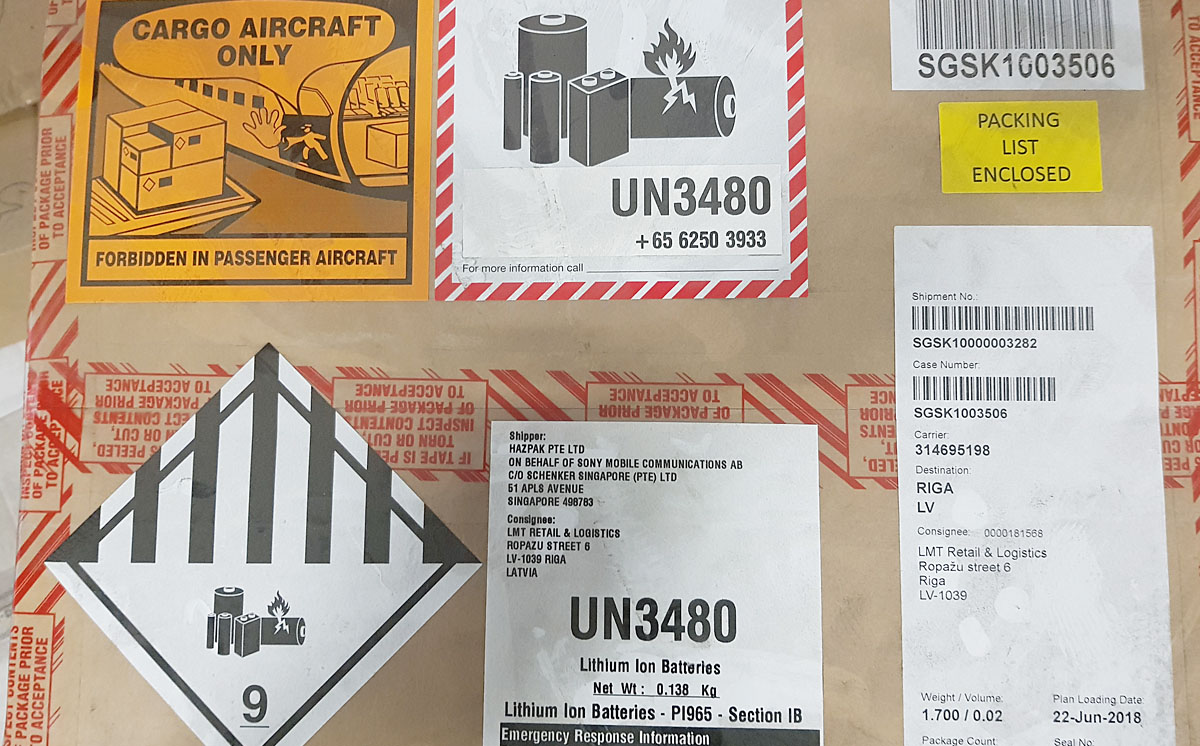
IATA-DGR adds „UN 3480 LITHIUM ION BATTERIES“, hazard label 9A and CAO mark to the Li-ion battery mark. This causes confusion, especially during road traffic checks.
©Foto: Norbert MüllerFor the transportation of packages with the four UN numbers 3090, 3091, 3480 and 3481 by air, there are no fewer than 14 special regulations and eight packing instructions (see table on page 83). The fee for the acceptance check at airports in accordance with section 9.1.3 of the IATA DGR is currently 128 euros, or 76 euros for „small“ batteries in and with equipment. Numerous airlines have restricted acceptance. Damaged/defective cells/batteries are generally excluded from transportation, and it is important that in all cases packers and shippers are trained and tested in acFoto: Norbert Müller cordance with the provisions of Chapter 1.5 of the IATA DGR to ensure that they have the necessary knowledge and skills to properly pack and ship dangerous goods.
What additional regulations must be observed for air transportation compared to the regulations for road transportation?
The „small“ cells and batteries
Anyone transporting UN numbers 3090 (≤ 1 g lithium per cell, ≤ 2 g lithium per battery) or 3480 (≤ 20 Wh per cell, ≤ 100 Wh per battery) must do so in accordance with the dangerous goods regulations for air transport (IATA-DGR) in accordance with packing instruction 968 IB (UN 3090) or 965 Part IB (UN 3480).
For UN 3480, the cells/batteries may be charged to a maximum of 30 percent. The shipper confirms this in/with the shipper‘s declaration.
In addition, a package may contain for
- UN 3090 a maximum of 2.5 kg of such cells/batteries
- UN 3480 a maximum of 10 kg of such cells/batteries (Caution: 30 kg gross are permitted in land transportation).
The package must be able to withstand a stacking load of three meters for 24 hours. In addition to the lithium battery label, the package must be marked with
- „LITHIUM METAL BATTERIES UN 3090“ or „LITHIUM ION BATTERIES UN 3480“ and the mark „CARGO AIRCRAFT ONLY“ and
- the hazard label 9A (see therefore section 3.3.1, SV 188 f) Note. ADR/IMDG Code) (see photo).
A shipper‘s declaration with the entry „UN 3090 LITHIUM METAL BATTERIES 9 PI 968 IB“ or „UN 3480 LITHIUM ION BATTERIES 9 PI 965 IB“ is required. The field „Passenger and Cargo Aircraft“ must be crossed out and „Dangerous Goods as per associated Shipper‘s Declaration and „Cargo Aircraft Only“ must be entered in the air waybill (T. 1, p. 81).
The „big“ cells and batteries
Anyone transporting UN numbers 3090 (> 1 g lithium per cell, > 2 g lithium per battery) or 3480 (> 20 Wh per cell, > 100 Wh per battery) by air must do so in accordance with packing instruction 968 Part IA (UN 3090) or 965 Part IA (UN 3480) of the IATA-DGR.
In the case of UN 3480, the cells/batteries may be charged to a maximum of 30 percent; the shipper confirms this in/with the shipper‘s declaration.
The package may contain a maximum of 35 kg gross weight of cells/batteries. For a package with more than 35 kg cells/batteries, see Special Provision A99 IATA-DGR in conjunction with Packing Instruction 974 ICAO-TI (not included in the IATA-DGR book).
In addition to „UN 3090“, the package must be marked with „LITHIUM METAL BATTERIES“ or „UN 3480“ with „LITHIUM ION BATTERIES“ and the mark „CARGO AIRCRAFT ONLY“.
A shipper‘s declaration with the entry „UN 3090 LITHIUM METAL BATTERIES 9 PI 968“ or „UN 3480 LITHIUM ION BATTERIES 9 PI 965“ is required; the field „Passenger and Cargo Aircraft“ in the declaration must be crossed out.
„Dangerous Goods as per associated Shipper‘s Declaration and „Cargo Aircraft Only“ must be entered in the air waybill.
The „small“ cells and batteries in and with equipment
Anyone transporting UN 3091 (≤ 1 g lithium per cell, ≤ 2 g lithium per battery, in equipment) or UN 3481 (≤ 20 Wh per cell, ≤ 100 Wh per battery, in equipment) by air must do so in accordance with packing instruction 970 Part II (UN 3091) or 967 Part II (UN 3481) of the IATA-DGR.
The package may contain a maximum of five kilograms of cells/batteries.
„Lithium-metal batteries in compliance with Section II of PI 970“ (if UN 3091) or „Lithium-ion batteries in compliance with Section II of PI 967“ (if UN 3481) must be entered in the air waybill (AWB). (Table 2)
The „large“ cells and batteries in and with equipment
Anyone transporting UN 3091 (> 1 g lithium per cell, > 2 g lithium per battery, in equipment) or UN 3481 (> 20 Wh per cell, > 100 Wh per battery, in equipment) by air must do so in accordance with Packing Instruction 970 Part I (UN 3091) or 967 Part I (UN 3481). The package may contain a maximum of 35 kg of cells/batteries in equipment. For a package containing more than 35 kg of cells/batteries in equipment, see Special Provision A99 IATA-DGR in conjunction with Packing Instruction 974 ICAO-TI (not included in the IATADGR book).
In addition to „UN 3091“, the package must be marked with „LITHIUM METAL BATTERIES IN EQUIPMENT“ or „UN 3481“ with „LITHIUM ION BATTERIES IN EQUIPMENT“ and the mark „CARGO AIRCRAFT ONLY“. A shipper‘s declaration with the entry „UN 3091 LITHIUM METAL BATTERIES IN EQUIPMENT 9 PI 970“ or „UN 3481 LITHIUM ION BATTERIES IN EQUIPMENT 9 PI 967“ is required.
If the package contains more than five kilograms of cells/batteries in equipment, the „Passenger and Cargo Aircraft“ box must be crossed out.
Enter „Dangerous Goods as per associated Shipper‘s Declaration“ in the air waybill and „Cargo Aircraft Only“ if the package contains more than five kilograms of cells/batteries in equipment.
Variants
The variants lithium metal/ion cells/batteries- packed with equipment (the equipment itself does not contain cells/batteries)- in equipment AND packed with equipment will only be mentioned here for reasons of space. Unlike ADR, IATA DGR, for example, limits the number of cells/ batteries permitted in the package.
Vehicles
A lithium-ion battery (UN 3480) can be installed as a drive unit in a vehicle. It is then a „UN 3171 BATTERY-POWERED VEHICLE“ (note: from 2025 it will be called „UN 3556 VEHICLE POWERED BY LITHIUM-ION BATTERIES“), regardless of the number of watt hours of the battery. Special provision 666 of the ADR completely exempts the carriage of UN 3171 by road from the application of the ADR. The situation is different in air transport: the transportation of UN 3171 is subject to the IATA-DGR dangerous goods regulations as follows:
The test summary for the battery according to paragraph 3.9.2.6.1 (g) IATA-DGR is required (packing instruction 952 (a) IATA-DGR). Fully packed vehicles must be labeled in air transport with
- „UN 3171 BATTERY POWERED VEHICLE“
- Danger label 9 (SV A87 IATA-DGR).
A shipper‘s declaration with the entry „UN 3171 BATTERY POWERED VEHICLE 9 PI 952“ is required. „Dangerous Goods as per associated Shipper‘s Declaration“ must be entered in the air waybill.
Conclusion
If lithium batteries are to be taken into the air (i.e. flown), numerous additional requirements must be taken into account. It is correct that ICAO-TI and IATA-DGR only permit trained personnel for packing and shipping. Anything else would be unacceptable.
Prof. Dr. Norbert Müller, publicly certified and sworn expert for the transport and storage of dangerous goods
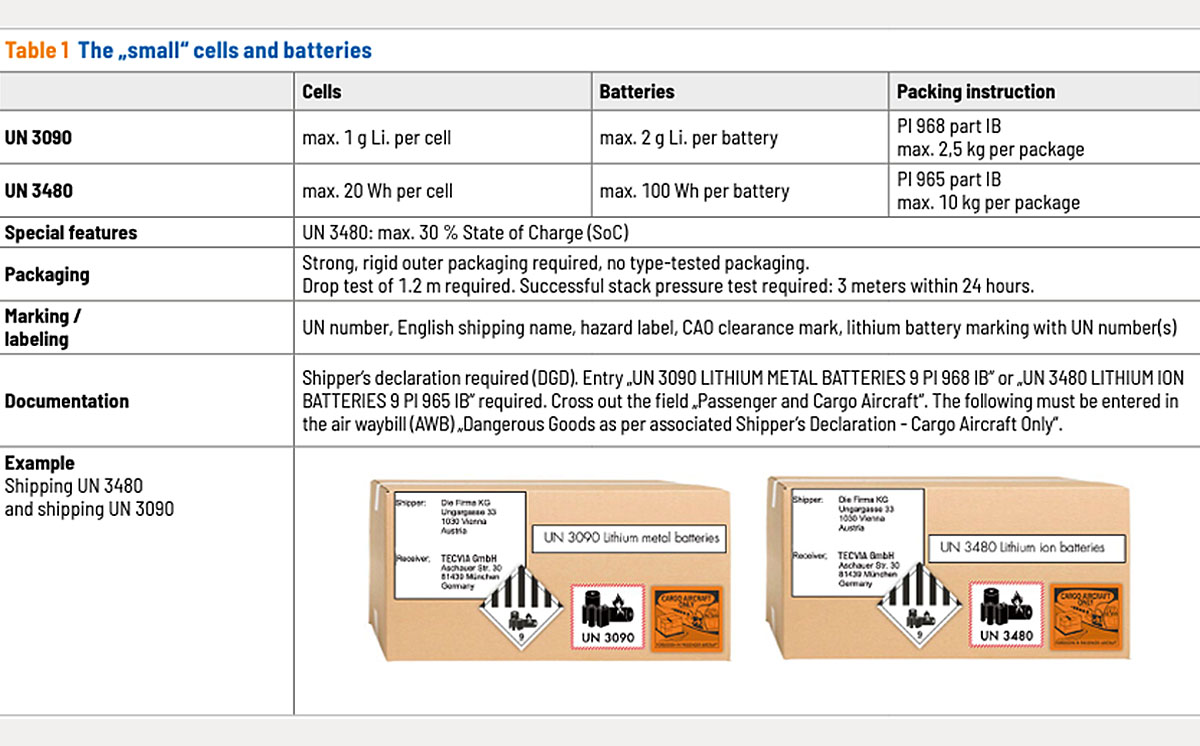
Table 1: The "small" cells and batteries
©Foto: Norbert Müller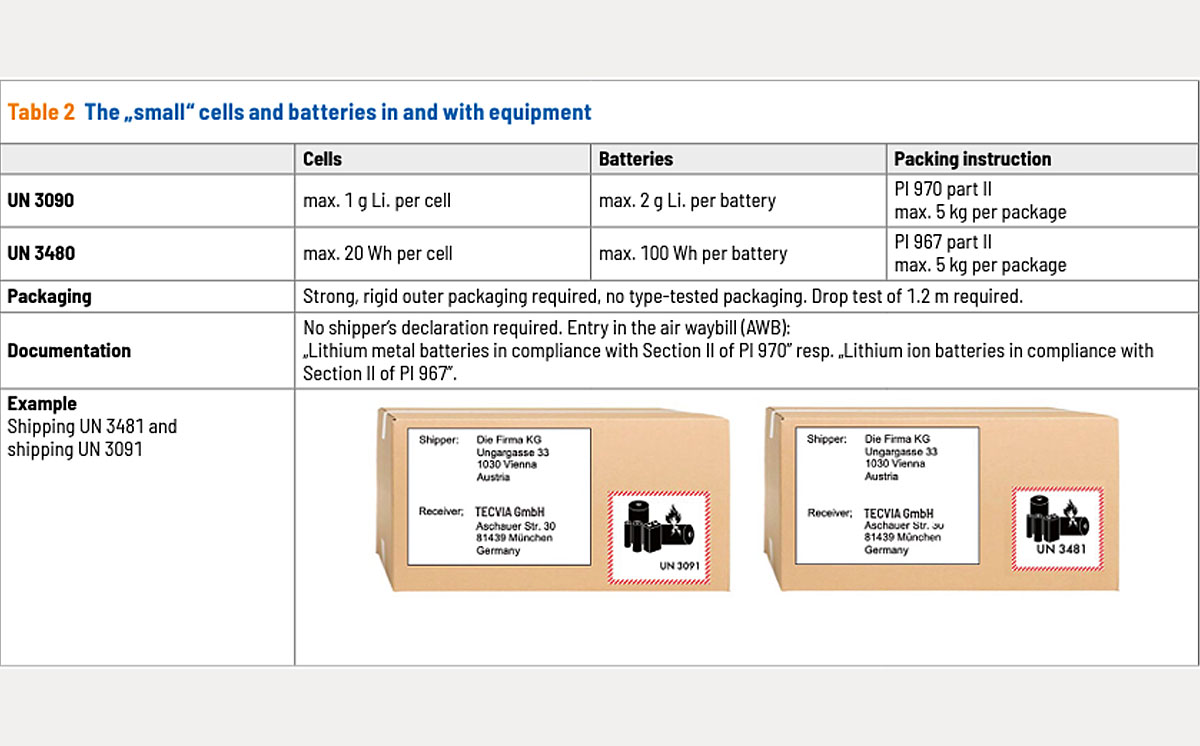
Table 2: The "small" cells and batteries in and with equipment
©Foto: Norbert Müller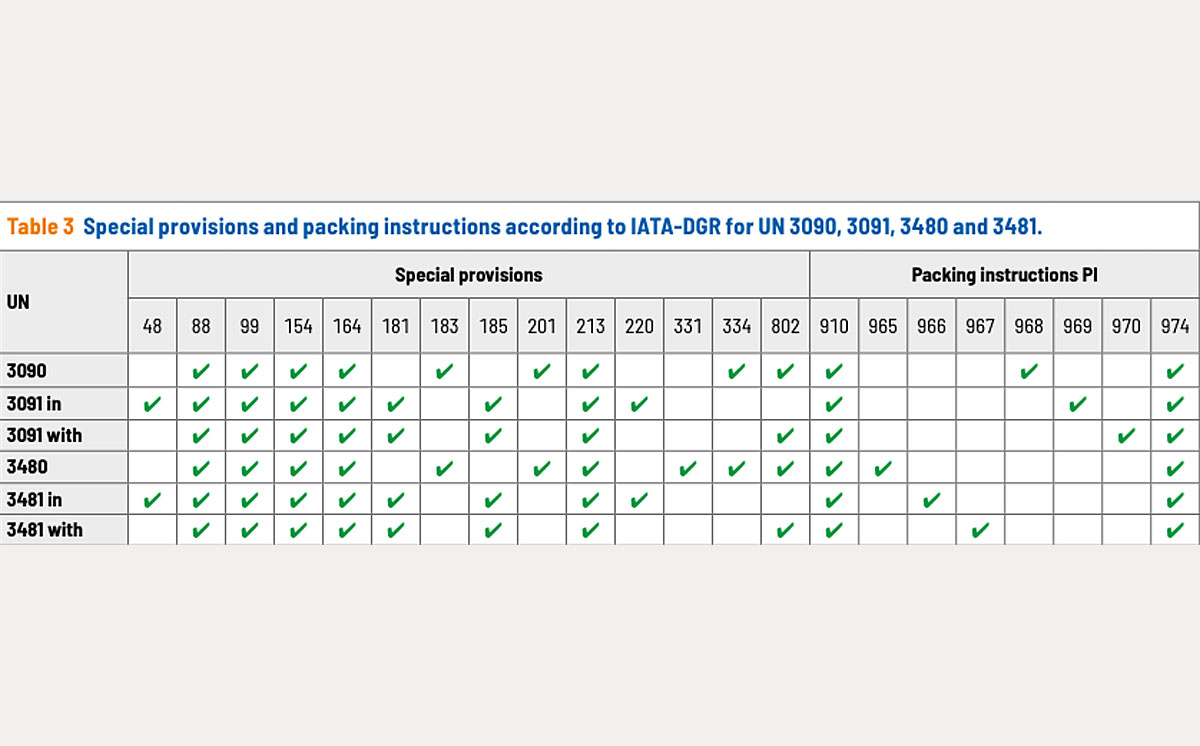
Table 3 Special provisions and packing instructions according to IATA-DGR for UN 3090, 3091, 3480 and 3481.
©Foto: Norbert Müller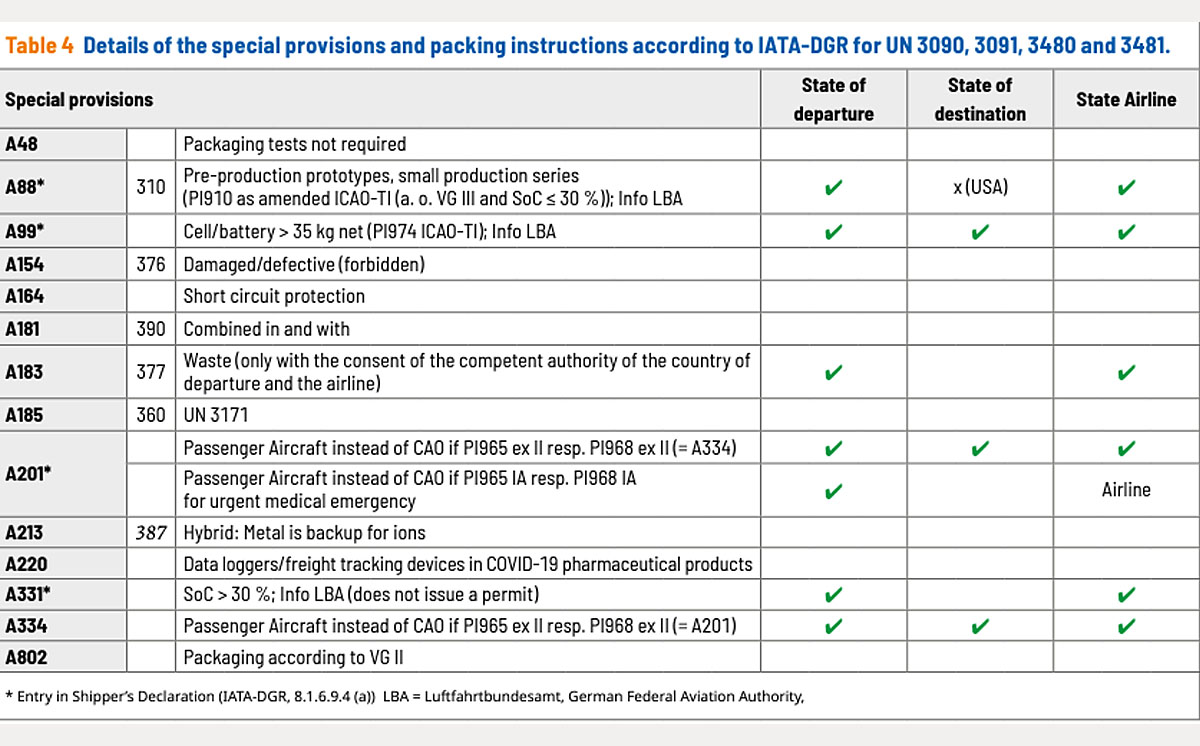
Table 4 Details of the special provisions and packing instructions according to IATA-DGR for UN 3090, 3091, 3480 and 3481.
©Foto: Norbert Müller© Copyright 2026 Gefahrgut-Online

Diskutieren Sie mit