fokus GEFAHR/GUT

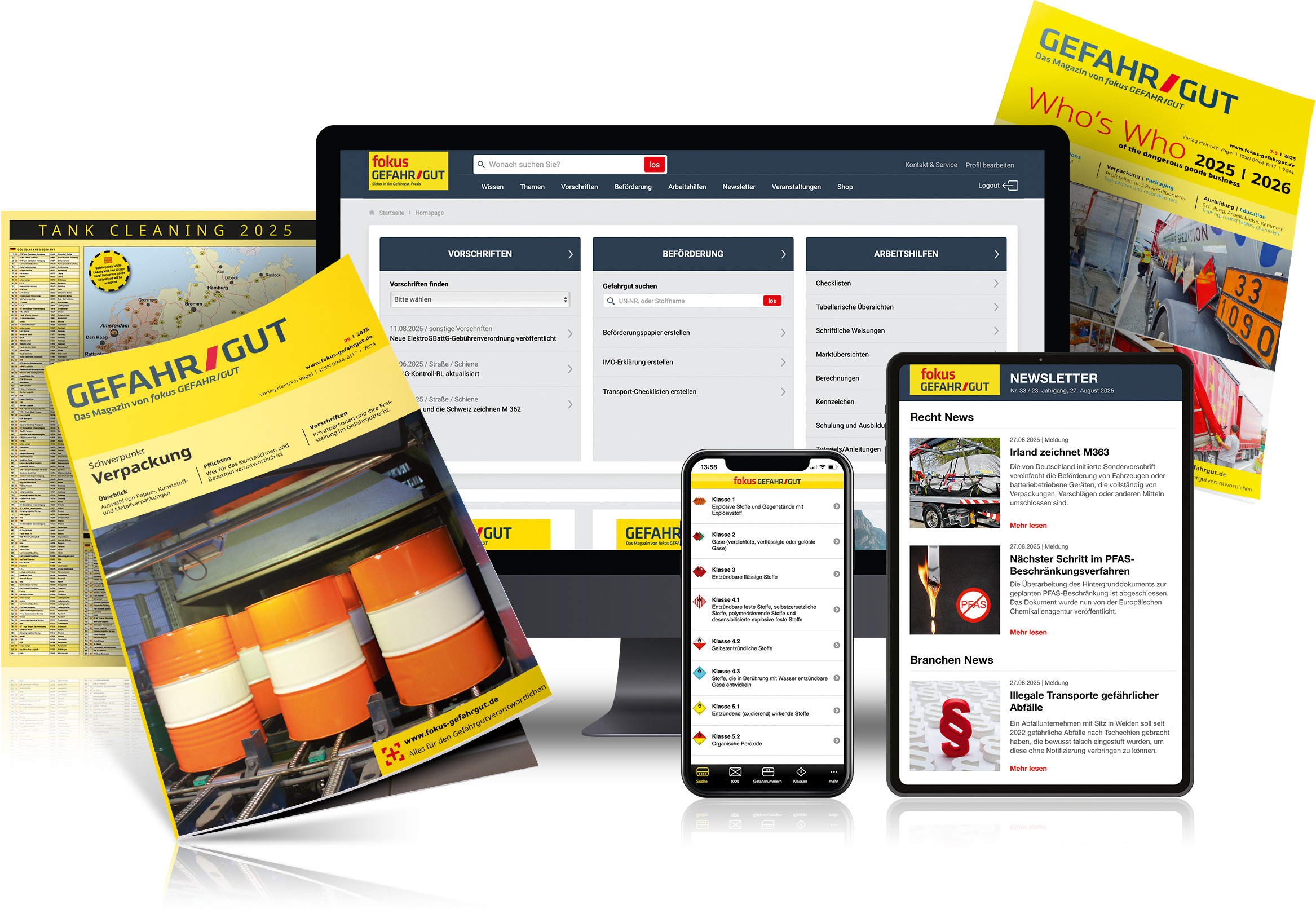
fokus GEFAHR/GUT - alles aus einer Hand!
- Digitaler Arbeitsplatz
Vorschriften online nutzen
Beförderungspapiere erstellen
Arbeitshilfen direkt einsetzen
Basiswissen zum Nachschlagen
Detaillierte Infos finden Sie auf dieser Seite unter "Ihr digitaler Arbeitsplatz".
3 Zugangslizenzen - APP
ADR-Stoffliste
1000-Punkte Rechner - MAGAZIN GEFAHR/GUT
Themenhefte
Karten und Sonderbeilagen - EVENTS
Kostenlose Webinare
Kongresse vergünstigt
3 MONATS-PAKET
|
JAHRES-PAKET
|
nur 187,30 €
|
nur 734,50 €
|
| netto inkl. Versand Jetzt bestellen | netto inkl. Versand Jetzt bestellen |
Ihr digitaler Arbeitsplatz
Vorschriften
Vollständige und aktuelle Regelwerke im direkten Zugriff und zum Durchsuchen
- Straßen/Schienen (ADR/RID)
- Seeschifffahrt (IMDG-Code)
- Binnenschifffahrt (ADN)
- Verkehrsträgerübergreifend
- Volltextsuche inkl. Autovervollständigung
- Meldungen zu Vorschriften, mit Alert
Beförderung
Sichere Vorbereitung und Durchführung von Gefahrguttransporten
- Stoffrecherchen + Datenblätter
- ADR, RID, IMDG-Code
- Beförderungspapiere erstellen
- IMO-Erklärungen erstellen
- Transport-Checklisten, stoffspezifisch und für jeden Verantwortungsbereich
Arbeitshilfen
Unterstützung für die Ihre tägliche Arbeit
- Checklisten und Mitarbeiter-Anweisungen
- Schriftliche Weisungen
- Kennzeichen zum Download
- Marktübersichten
- Tabellarische Übersichten
- Berechnungstools, wie 1000-Punkte oder Trockeneis
- DIE Gefahr/gut- App - Stoffinfos ADR immer zur Hand, 1000-Punkte, Hilfe zur richtigen Kennzeichnung
Wissen
Grundwissen für alle Gefahrgutverantwortlichen
- Basiswissen für alle Verkehrsträger: Einführung in das Gefahrgut-Handling, zum Einarbeiten und Nachlesen
- Umfangreiches Glossar: Alle Fachbegriffe mit Erläuterungen
- FAQ: Die wichtigsten Fragen zur Gefahrgut-Praxis mit Experten-Tipps
Themen
Ausführliche Schwerpunkte und aktuelle Meldungen
- Gefahr/gut-Magazin (9 Themenspecials + Branchenguide)
- Thema des Monats (Fachbeiträge, Interviews, Marktübersichten, Praxisberichte)
- Gefahrgut-Meldungen
- Themensammlungen
- Alle Themen sind über Schlagworte verknüpft mit den weiteren Inhalten des Portals wie Arbeitshilfen oder Vorschriften
Magazin
Regelmäßig bei Ihnen auf dem Schreibtisch - mit dem Thema des Monats
- Themenschwerpunkte - ausgewählt aus Ihrer betrieblichen Praxis
- Fachbeiträge
- Praxisberichte - für Sie unterwegs
- Interviews
- Panorama-Seiten zu vermischten Themen
- Verknüpfung mit den neuen Online-Inhalten für das aktuelle Thema
Das sagen unsere Kunden

„In den bisher 8 Jahren meines Abonnements hat sich fokus GEFAHR/GUT vom reinen Printmedium zum liebgewonnenen, in seiner Vielfalt unverzichtbaren digitalen Werkzeug entwickelt. In den Webinaren und Fachkonferenzen finden Gefahrgutbeauftragte unabhängig ihres Erfahrungslevels Anregung, Inspiration und Wissenszuwachs.“

„fokus GEFAHR/GUT ist ein absolutes Must-have für den zeitgemäßen Gefahrgutbeauftragten, denn es ist ein Rundum-Sorglos-Paket. Modern, intuitiv, informativ und erschwinglich. Dem Team hinter GEFAHR/GUT ist es gelungen ein modulares und umfangreiches Kompendium zu erstellen, somit wird die Arbeit eines jeden Gefahrgutbeauftragten erheblich erleichtert. Endlich wurde der endlosen Blätterei im ADR ein sehr befriedigendes Ende gesetzt. Danke dafür!“

„Zeitersparnis, Übersichtlichkeit, Aktualität – auf einen Blick erschließen sich dem
Gefahrgutverantwortlichen Hilfestellungen für die tägliche Praxis. Die wertvollen Fachartikel
und Informationen aus der „Gefahrgutszene“ möchte ich nicht missen.“
Sie haben noch Fragen?

Sie haben noch Fragen und benötigen weitere Informationen zu unserem Angebot? Oder Sie haben Fragen zur Registrierung und Freischaltung für Abonnenten?
Gerne stehen wir für Ihr Anliegen zur Verfügung.
- Kundenbetreuung und Abo
(089) 20 30 43 - 1100 - Technischer Support
(089) 20 30 43 - 1600 - E-Mail
vertriebsservice@tecvia.com